
Residential energy efficiency in Queensland: an integrated approach to envelope, air sealing and heat and moisture balance
In Queensland, residential energy-related provisions and approval conditions are often intertwined with envelope construction, window opening proportions, solar shading and electromechanical system selection. Many owners pay more attention to the facade effect and interior layout during the planning stage, and it is easy to understand "energy efficiency" as an equipment issue that can be superimposed later. Judging from our experience in new construction and renovation projects, if containment paths, air leakage sensitive areas and condensation risks are not included in drawings and process schedules at an early stage, the most common cost on site is not material price differences, but rework, replacement parts and construction schedule disruptions.
Our company's point of view can be summarized as follows: energy efficiency is first a "buildability" issue, and secondly an indicator issue. The so-called constructability means that the nodes can be implemented structurally, inspected technologically, and can still be maintained after completion. For example, the intersection between the roof and the exterior wall, the edge of the floor slab, the pipe penetration enclosure, and the connection between the garage and the main house are all areas where thermal bridges and air leakage are concentrated. If the design drawings only indicate the name of the materials without giving the layered structure and closing sequence, it is easy for a blank zone to appear between subcontractors because "everyone thinks that the other party will handle it." This will eventually manifest itself as abnormal air conditioning load, local condensation, or an increased risk of mold.
Air tightness does not require that the house become a "closed box", but requires the formation of a continuous barrier at a controllable location and the maintenance of healthy ventilation through organized fresh air and exhaust air. Queensland has diverse climate zones. Coastal and high-humidity areas place more emphasis on enclosure tolerance to water vapor and drying paths; inland and highlands may place more emphasis on winter insulation and summer radiant heat. In the early stage of the project, we will recommend that the client and the designer jointly confirm: which spaces belong to the "air-conditioned controlled area" and which are semi-outdoor or storage purposes, so as to determine the layout logic of air tightness targets and test points, rather than covering all rooms with the same set of slogans.
In terms of moisture and heat balance, we pay special attention to the water vapor partial pressure difference on both sides of the insulation layer and the drying direction. Mistakes are to put high vapor resistance material on the wrong side or to seal the finish without assessing the moisture content of the existing wall. In renovation projects, old walls may be subject to long-term capillary rise or salt crystallization left by leakage; if internal insulation is directly installed, moisture may be "locked" in the structural layer. Our approach is to first identify the source of moisture using a combination of non-destructive and partial opening methods, and then decide on the combination of moisture-proof layer, drainage board, ventilation cavity and finishing materials, rather than applying a universal package.
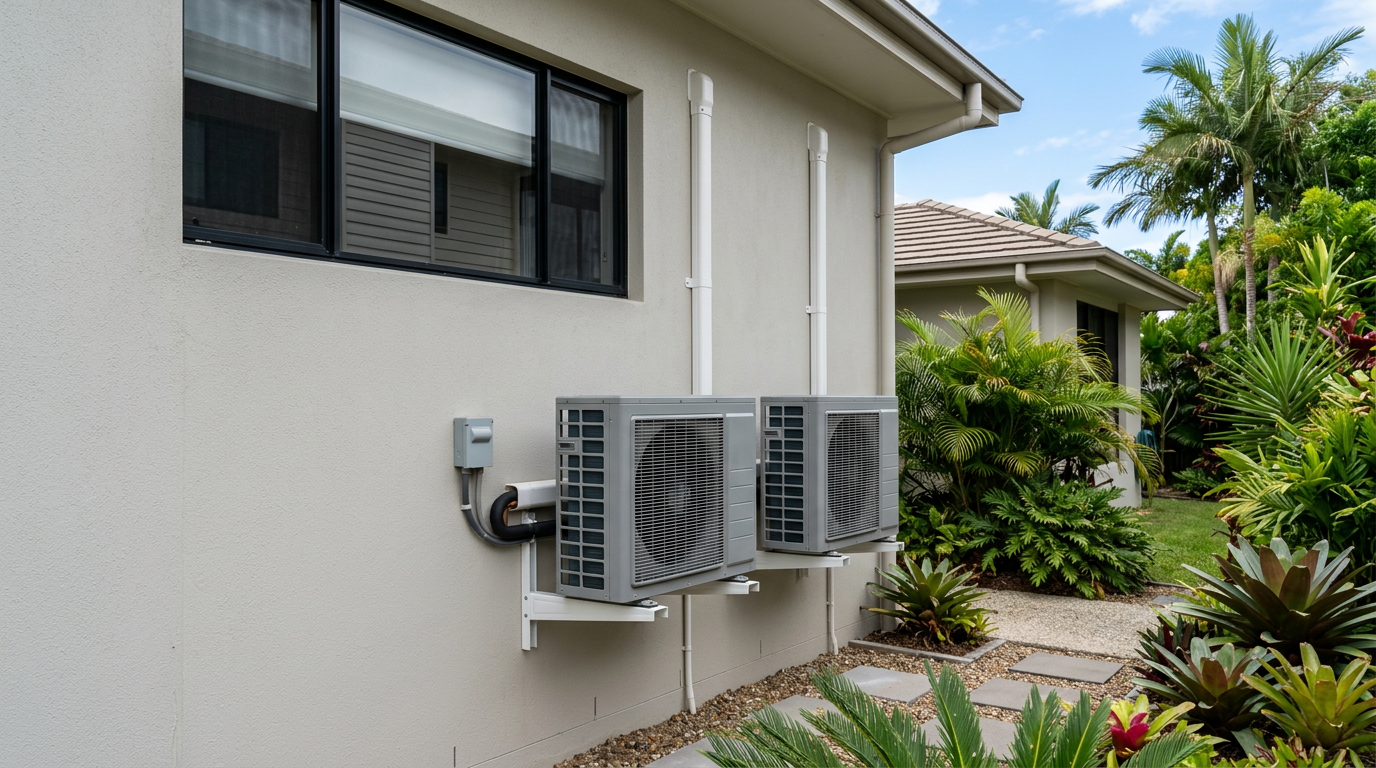
Interfaces with energy assessors and M&E consultants are equally critical. When a residence uses split air conditioning, full heat recovery fresh air, or hybrid mode, the control strategy and enclosure performance should match. If the air leakage rate of the enclosure is high, the design air volume and energy consumption assumptions of the fresh air system will deviate from the actual operation. We recommend forming a "system boundary description" during the construction drawing stage: which loads are borne by the building itself, which loads are borne by the equipment, and which loads are adjusted through open interfaces. The description does not need to be lengthy, but it must serve as a reference for the change review, otherwise any subsequent changes to window openings, shortening of overhangs or closing of balconies may trigger chain adjustments.
In Queensland, western sun and summer afternoon radiant heat often dominate indoor comfort. External shading, eaves depth and glass selection need to be considered together, rather than just increasing the air conditioning capacity. We have seen cases where fixed shading is insufficient due to facade shape restrictions and only indoor curtains are used to remedy the situation: Curtains can indeed reduce glare, but if they cannot be automatically adjusted during unoccupied periods, the enclosure will continue to accumulate heat, which is released at night and causes discomfort in the sleeping area. A more prudent strategy is to reserve physical shading conditions for key rooms in the building shape, and incorporate the relationship between the open area and the dominant wind direction into the plan.
The linear thermal bridge at the intersection between the floor slab and the exterior wall is sometimes simplified in the model. However, if the insulation layer is discontinuous on site, obvious cold bridges or thermal bridges will be formed, inducing condensation and mold. The boundaries between stairwells, voids and residential floors above garages are particularly sensitive. We require that the detailed drawings clearly indicate the geometric closed path of the thermostatic layer, and that the continuity behind the surface layer be checked on-site through random inspections, rather than just accepting the surface finish.
Door openings and pipeline openings between the garage and the main house are airtight weak links. If the garage door is opened frequently, contaminants and humidity may also migrate into the living area. In addition to the quality of the door leaf sealing strip, the threshold height difference and drainage slope are equally important. Energy models often assume that the door is always closed, but children, pets, and handling behaviors in real life will distort the assumption; therefore, a certain amount of redundancy should be allowed in the structure, and reasonable habits should be prompted in the instructions for use.
If the insulation integrity is compromised by electromechanical wiring in the roof space and suspended ceilings, hidden shortcuts can be created for heat and moisture to cross the design barrier. We require that an "insulation integrity inspection" be completed before the ceiling is closed, and remedial measures such as prefabricated frames or backing insulation blocks should be used for lighting openings, speaker holes, and access openings, and recorded in the as-built drawings to avoid secondary damage during future renovations.
Swimming pools, large fish tanks or indoor green walls can significantly change the local humidity field. If exhaust and containment steam management are not provided, early failure of woodwork and coatings in adjacent rooms may occur. Such "lifestyle fixtures" should be synchronized with the M&E consultant during the planning stage, rather than being added at the end of the renovation.
Passive strategies and proactive devices are not opposites. Ventilation can still be used to cool down at night in many areas of Queensland, but only if it is safe, insect-proof and noise can be controlled. The position, height and opening method of the openable window sash should facilitate the formation of a draft path and avoid water intrusion during heavy rain. We recommend doing a simple smoke test or tracer observation during the prototype stage to verify whether the air path meets expectations.
For subcontracting training, enclosure systems are often a cross-work subject: carpenters, waterproofers, electricians and curtain wall installers are all involved. If you only disclose information to one of the parties, it is very easy for interface omissions to occur. We use the method of juxtaposing node samples and process cards to reiterate the key dimensions and compatible materials on the day's work surface during the morning meeting to reduce "I thought" errors.
In terms of quality records, in addition to photos, the batch numbers and arrival dates of key batches of materials should correspond to the installation area. When color differences or performance disputes arise, traceability determines the efficiency of liability definition. We understand that customers may not review each item one by one, but these records are of outstanding value in insurance and resale home inspection scenarios.
For investment owners, energy efficiency performance is affecting asset liquidity. Lenders and some buyers are more concerned about running costs and compliance with compliance documents. Making the energy path solid is not only about the living experience, but also about the bargaining space for future disposal. We recommend that "documentation and testing" be included as a separate line item in the construction budget, rather than being squeezed out of the management fee as a result.
In a renovation project, if part of the old envelope is retained and the new extension is built to a high standard, the thermal and moisture behavior at the interface between the two needs to be assessed. New and old materials absorb water at different rates and dry out at different rates, which can lead to moisture accumulation at the interface. Our approach is to set up transitional structures and monitoring points at the junction, and use removable access doors when necessary instead of sealing them all at once.
The construction season and rainfall window will affect the quality of insulation installation. Pasting insulation material on a wet base or opening holes in rainy days may bury hidden dangers. We will adjust key processes based on weather forecasts and communicate acceptable construction schedule flexibility with customers. Rushing should not come at the expense of verifiable dryness and cleanliness.
Finally, energy efficiency discussions should avoid moral hijacking. Different households have different budgets, health needs and usage patterns, and it is the professional builder's job to provide a transparent explanation of options and consequences, not to make value judgments for the client. We respect our customers' choices between comfort, initial investment and maintenance burden, as long as the choice is based on adequate information.
The relationship between simulation and actual measurements needs to be properly understood: energy models rely on input assumptions, and if the assumptions deviate from the finished construction product, the results are only for reference. Where possible, we will recommend sample air tightness testing or thermal imaging inspections of key residences to calibrate the team’s understanding of the nodes. This test is not a show-off metric, but a learning tool for continuous process improvement.
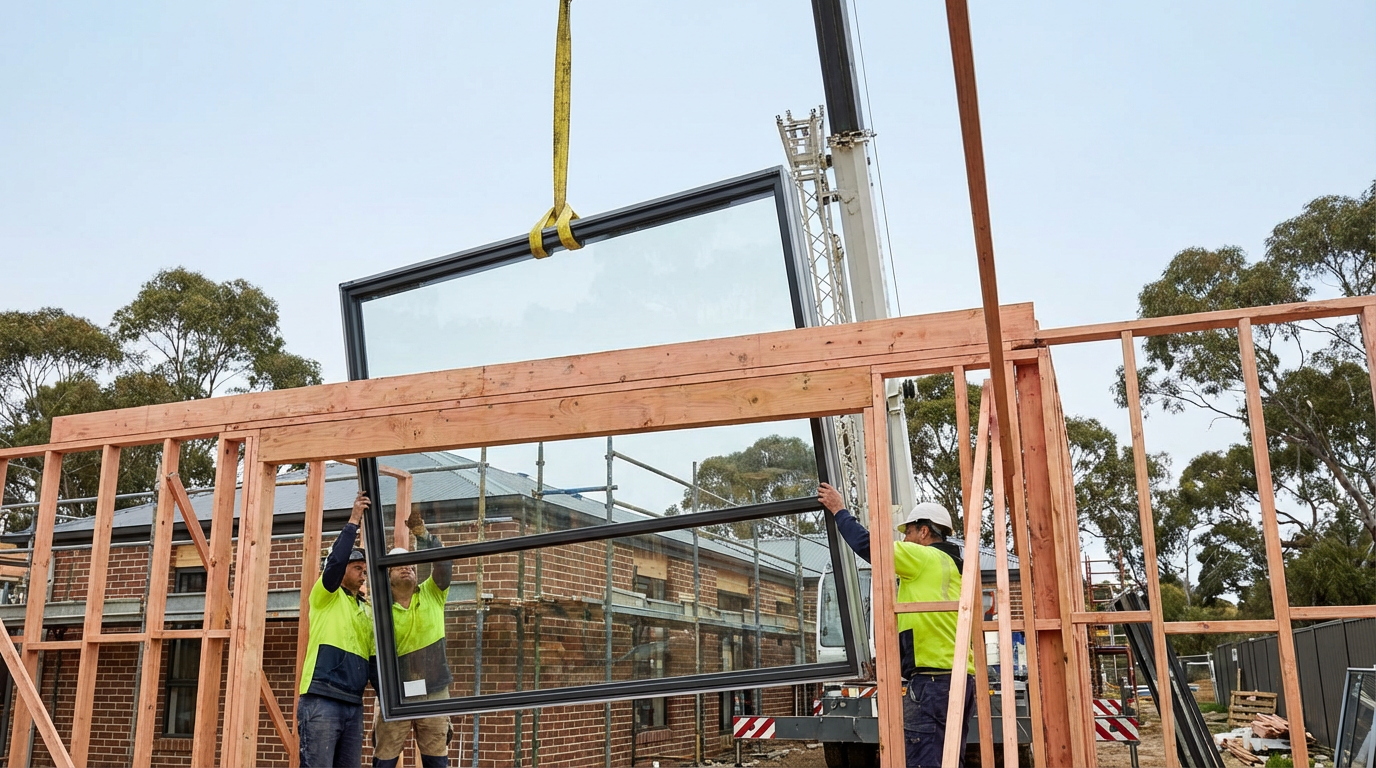
The installation of sub-frames, spacers and anchoring distances between windows and curtain wall systems directly affect water tightness and air tightness. A common failure is that the gap between the sub-frame and the structure is not filled with compatible materials, resulting in cracking and water leakage after long-term fretting. We require the installer to provide process instructions that match the system, and conduct spot checks for water spraying after the first window is installed (within the scope of the contract and weather conditions).
Fastener thermal bridging and vapor paths must be evaluated when roof PV mountings penetrate waterproofing layers. If the penetration points are dense, the traditional insulation layer may be locally compressed, forming a weak zone. We will jointly review the drawings with the roofing subcontractor and photovoltaic installer to ensure that the flashing and support base are integrated into the design, rather than drilling holes afterwards.
Basements or semi-underground spaces are relatively rare in Queensland, but houses on slopes may have rooms inside local retaining walls. The insulation and moisture-proof strategies for this type of space are completely different from those for the above-ground floors, so copying the standard exterior wall system would be extremely risky. We recommend that the provisions for drainage boards, pressure relief layers and mechanical dehumidification be clearly defined in the early structural plan.
In response to the owner's design change request, any decision to expand the window area or increase the proportion of glass curtain walls should simultaneously trigger an energy and structural review. We will not build to verbal instructions without receiving written confirmation from the consultant as this compromises both compliance and long-term trust between the parties.
Community-level microclimates, such as proximity to water bodies, dense vegetation, or proportions of hard paving, can also change the actual thermal environment of a home. If landscape and hard area can be included in the discussion during the master plan stage, it is often more sustainable than simply increasing equipment capacity. We encourage clients and landscape designers to get involved early, rather than “adding greenery” at the end.
In the long run, the building envelope and electromechanical systems need the same "operation and maintenance language". We try to use icons to mark the location of the filter, drainage cleaning points and recommended inspection frequency in the handover documents to reduce the communication cost when the owner subsequently entrusts third-party maintenance.
When customers compare multiple quotes, it is recommended to pay attention to whether the enclosure and energy-related items are comparable: the same "insulation" may correspond to different thicknesses, different thermal conductivity or different installation processes. We welcome benchmarking based on unified assumptions and are willing to explain sources of differences within our mandate so that clients can make rational decisions.
The above principles apply to common new construction and renovation scenarios in Queensland, but specific projects still need to be analyzed on a case-by-case basis based on the site, microclimate and usage.
In the approval and acceptance process, the consistency of energy documents and on-site practices requires traceable records. If parameters such as material thermal conductivity, glass system performance, and roof reflectivity are inconsistent with the declaration, you may face supplements or even re-evaluation. During the construction process, we retain supplier statements, site entry photos, and sampling and installation records for key batches, and complete node photos before the concealed project is closed. This is not done to "stack information", but to use the timeline to restore the facts when disputes arise and reduce the consumption of construction time by verbal wrangling.
For owners, the operational decision-making framework is: first determine the priorities of comfort and operating costs, and then work backwards to determine the combination of enclosures and equipment. If the budget is limited, priority should be given to the continuity of roof waterproofing and thermal insulation, the main thermal bridges of exterior walls, the overlap of door and window installation sub-frames and waterproof and breathable layers, followed by the upgrade of finishes. We do not agree with the path of "finishing it cheap first and then repairing it", because on a residential scale, repairing often means dismantling the visible completed surface, and the emotional and financial costs will be magnified.
Finally, energy efficiency and durability should be included in the same set of goals. High-performance homes with complex nodes that are difficult to maintain may still degrade over the long term. We will provide enclosure-related maintenance points during the delivery phase, such as exterior wall coating recoating cycles, gutter cleaning, air conditioning filter and fresh air filter element replacement, and inspection items for wooden sunshade components. A home is not a one-time exhibit, but a long-term asset; writing professional judgment into an executable maintenance list is closer to the customer's interests than simply publicizing indicators.
Observing market and compliance trends, Queensland’s focus on the overall performance of residential properties will only gradually become more detailed, and approval agencies and financial institutions will be more sensitive to the consistency of energy documents. We recommend that energy consultants be included in the core collaboration circle at the project establishment stage, rather than waiting until the construction drawings are completed. The earlier the assumptions are aligned, the less likely there will be structural contradictions such as the facade being determined but unable to meet the window opening restrictions, and the structure being determined but unable to accommodate the thickness of the insulation.
Education customers and self-use customers have different understandings of the "language of energy efficiency", and the depth of communication needs to be adjusted. We avoid a clutter of abbreviations and rating terms, preferring to use schematic diagrams to explain the paths of heat, air and moisture through a home, allowing non-expert homeowners to participate in key trade-offs.
In summary, our company prefers to regard energy efficiency as part of project quality: clear construction logic, verifiable processes and honest risk assessment in exchange for stable results. If you are comparing different construction paths, you are welcome to discuss the overall planning of enclosures and electromechanical solutions through formal inquiry channels based on specific plots of land and house types. The views on this page do not constitute a commitment to a specific project, and the implementation conditions are subject to the contract, drawings and approval documents.
← Return to Insights overview