
Land and townhome development multiplies the complexity of a single dwelling many times over: multiple units share the same streetscape, and phased delivery sits on top of council interfaces and landscape fill sequences. Our focus is on front-loading shared risks into the site plan and interface matrix, so that independent optimisation by each unit does not leave systemic weaknesses at party walls and shared stormwater lines.
Site levels and stormwater
Roof and site runoff, driveway grades, and council connection levels are resolved in one pass; phased protection or relocation is budgeted explicitly.
Interfaces and strata
Party walls, risers, shafts and access points are numbered consistently between drawings and the physical site to support long-term maintenance.
Sales-to-construction alignment
Marketing drawing descriptions and construction drawing versions are reconciled before sample orders are placed, reducing handover disputes.
Site levels and stormwater
When multiple dwellings are built in parallel, roof and site stormwater paths, driveway longitudinal grades, kerb dispersion, and council connection levels must be resolved as a closed and coordinated system at master-plan stage. During phased delivery, drainage, infiltration, and temporary pavements completed in early stages must have explicit protection or relocation budgeted into later earthworks and footings — otherwise claims for "Stage 2 excavation damaging Stage 1 finished work" are almost inevitable.
If landscape fill height is not reviewed alongside wall-base damp-proofing depth and irrigation spray radius, abnormal subfloor moisture or efflorescence can appear within a few years of handover.
Interface matrix and shared-component strategy
The locations of party walls, stormwater risers, mechanical and electrical shafts, smoke-exhaust ducts, and access points should have a direct one-to-one correspondence between the strata plan, services location plan, and physical site. During construction, establish a unified numbering system for shared components (including concealed-works photo indexes), so that the responsible interface for any future leakage, noise complaint, or equipment replacement can be identified quickly — rather than relying on each household's recollection.
Facade module and procurement batching
If each unit independently optimises facade joint positions without a unified module, brick-joint misalignment, complex flashing geometry, and waterproofing difficulties are likely results. Material batches, colour-match tolerances, and substitution rules should be documented at tender stage and cross-checked against finish reflectivity assumptions in energy and approval documents.
Aligning sales commitments with construction drawings
Discrepancies in window type, floor-to-floor height, or equipment platform clearance between marketing drawings and construction drawings typically emerge during the purchaser's pre-settlement inspection. We recommend freezing external commitments and locking approvals and energy documents before entering large-scale procurement and production scheduling. Any upgrade items shown in display suites should be simultaneously mapped to contract attachments and change-pricing schedules.
Phased delivery: timing risks from council and landscape interfaces
Early-stage roads and drainage facilities frequently become invisible obstacles to later excavation. Professional programming should list protection, relocation, and temporary diversion as measurable and inspectable milestones, priced as separate line items in the total contract — not absorbed into a vague "site levelling" allowance.
Browse related works
The following cases involve multiple sets of interfaces, rainwater and site organization, and can be read in conjunction with the topic of this page; the conclusions are not extrapolated to unassessed plots.
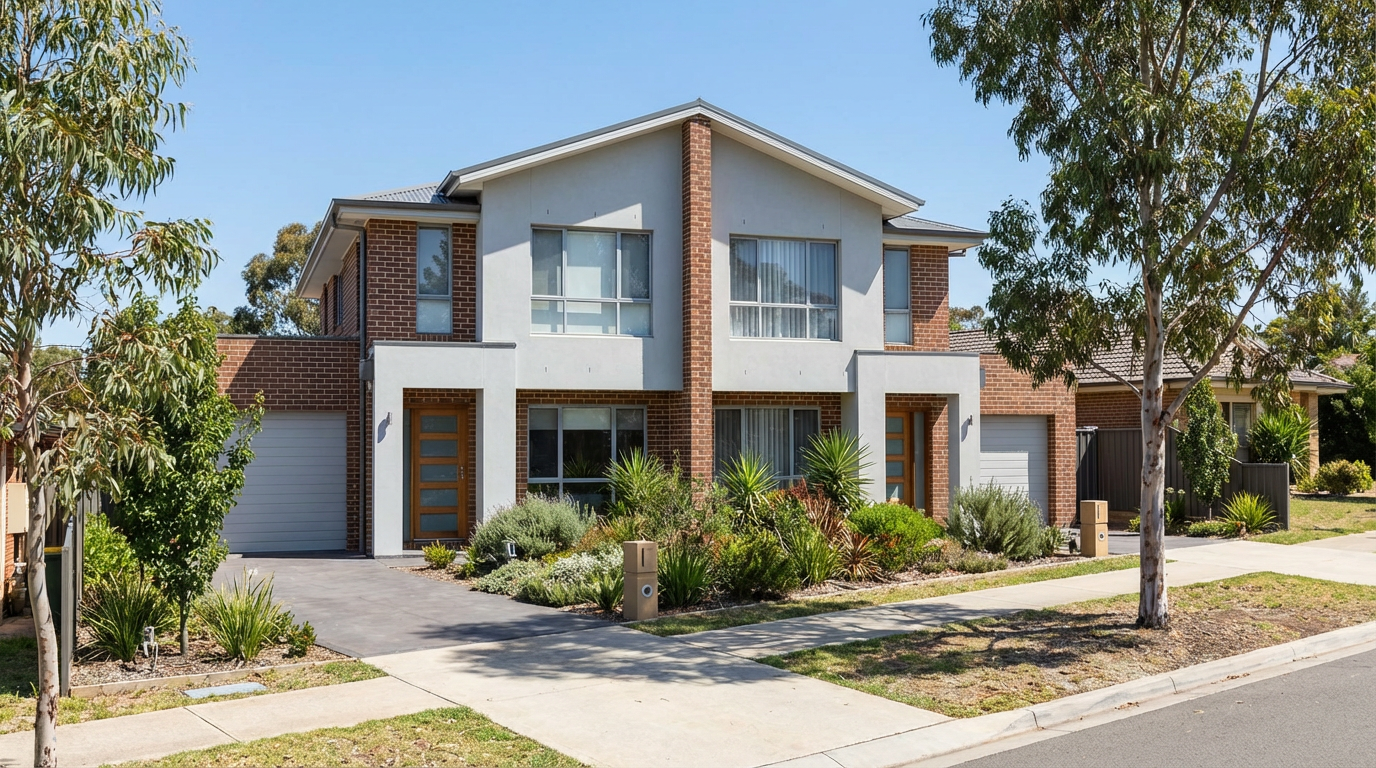


Frequently Asked Questions · Land and Town Development
During phased development, how should the responsibility for the damage to the drainage facilities in the first phase caused by the excavation in the second phase be pre-arranged?
Protection plans, monitoring obligations, breach-of-contract remedies, and insurance conditions should be clearly defined in the head contract or development management agreement. The "protection scope of Stage 1 completed works" should be marked on drawings and reviewed alongside the construction logistics route. The professional approach is to make these items inspectable hold points rather than dealing with them retrospectively after completion.
What are the consequences if the strata plan is inconsistent with the site number?
If there is no one-to-one correspondence between the strata documents and on-site labels for shared rainwater risers, shafts and inspection openings, it will be easy to shirk responsibility when leaks occur or equipment is replaced later. During the construction stage, a unified numbering system should be established and written into the completion index. If necessary, diagrams should be attached to the handover instructions.
Why do differences between marketing templates and construction drawings become the main cause of home inspection disputes?
Models often use upgraded finishes or non-standard nodes. If it is not mapped as "included/not included" in the contract attachment, customers will use the model as a reference to claim rights. The professional process is to lock the construction drawing revision number after the external commitment is frozen, and convert the upgrade item to clearly marked pricing options.
How to optimize multi-type facades to avoid waterproofing and module disasters?
It is advisable to establish streetscape modulus and flooding level rules during the planning stage, and then allow internal changes in the set type. The positions of brick joints, hanging board joints and gutters should be jointly checked on the facade expansion drawing, and batch color difference control should be written into the procurement technical specifications.
Development and townhome project enquiry
Please provide the number of units to be phased in, whether there is a master plan and strata draft, and the target sales/delivery pace, so that we can make a preliminary judgment on interface coordination and production scheduling risks.
Business is governed by written contract, drawings, and approval documentation; this page is informational only and does not constitute an offer or guarantee. Specific scope is as agreed in your contract.