
Joint construction and duplex projects: key points for coordination of boundary walls, rainwater and facade modulus
Joint-building housing is commonly seen in staged sales and small and medium-sized development scenarios in Queensland. Compared with independent houses, the core risks are concentrated in the "shared interface": the fire protection and sound insulation structure of the boundary wall, the ownership of rainwater downpipes, the impact of overhangs and awnings on adjacent plots, and construction conflicts caused by inconsistent facade modulus. We recommend drawing an "interface matrix" during the concept stage, listing structural, waterproofing, mechanical and electrical and appearance responsibilities at each shared boundary, rather than relying on verbal agreements.
The interface matrix should be equipped with "version number" and "change log". Joint construction projects often adjust the layout due to sales strategies, resulting in changes in facades or roof lines; if the matrix is not updated and the construction site is still constructed according to the old understanding, undefined bands will be left at the top of the shared wall or at the edge of the cornice. We require that every time the kit changes, the matrix is updated simultaneously and the general package and key subcontracts are distributed.
In a strata context, the boundaries between shared property and individual property may not exactly match the physical boundaries. If stormwater risers are located in a common space, maintenance responsibilities and cost sharing need to be readable in the owners' association rules. During the construction phase, hidden engineering signs should be matched with the as-built drawings to avoid loss of control over the scope of wall cutting during future repairs.
Whether the construction joint is left in the center of the boundary wall or to one side will affect the constructability of future single-side renovations. If the location of the seam does not take into account the different decoration thicknesses on both sides, it may cause the nail hanging system on one side to invade the neighbor's sound insulation layer. We will ask such "future state" questions during the drawing review.
Scaffolding sharing and zoning demolition have caused neighborhood disputes in joint construction projects. If one side is dismantled in advance, resulting in insufficient air protection on the other side, the boundary between safety risks and legal responsibilities will be blurred. The general contractor should develop a phased scaffolding conversion plan and coordinate with adjacent construction sites (if phased development is undertaken by different contractors).
The batch consistency of colors and materials in joint construction projects affects the sense of streetscape. If two adjacent buildings use the same brick type but different batches, the color difference may not become apparent until months after completion. We recommend unifying batch strategies or accepting controllable color-hopping designs at the ordering stage rather than arguing afterward.
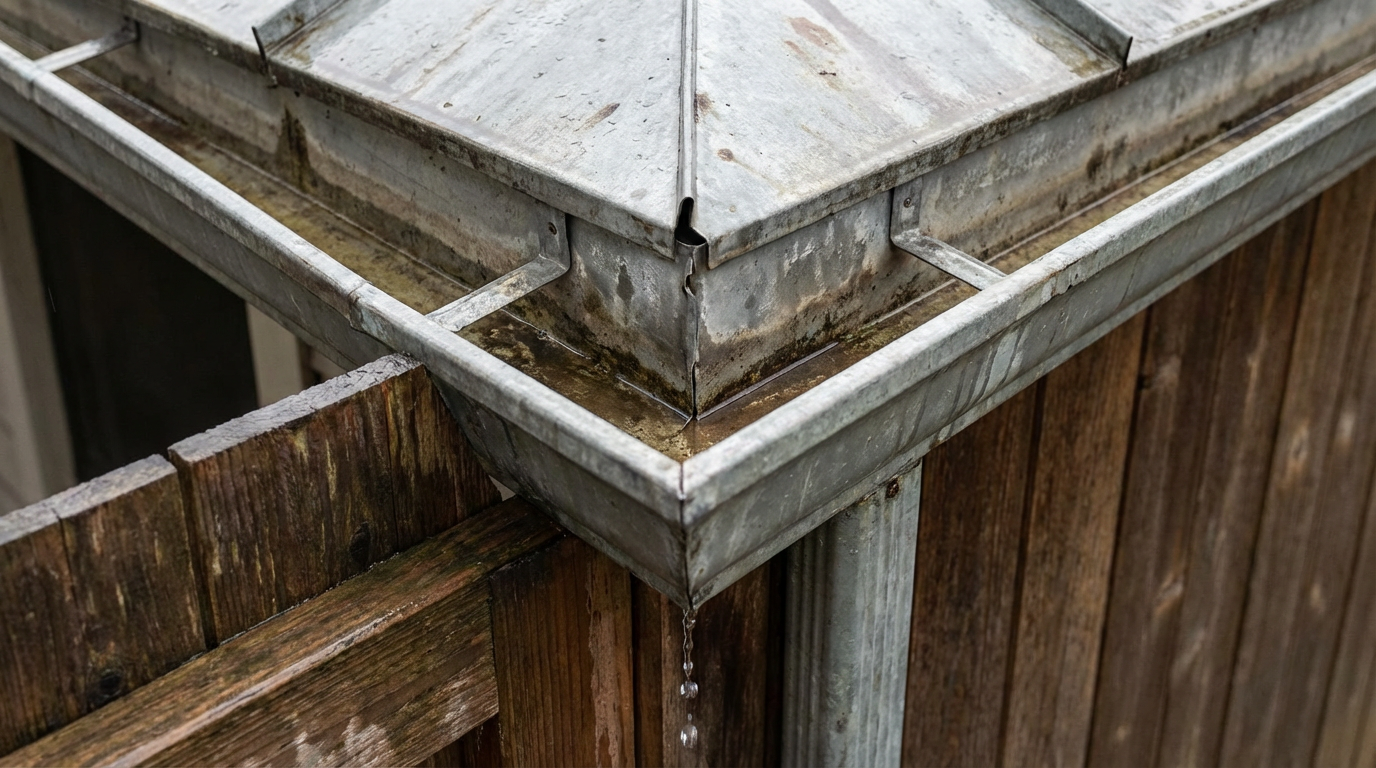
Boundary walls are not only structural walls, but may also be attachments to vertical rainwater channels. When the roof heights on both sides are different or the gutters are asymmetrical, the lower side is often exposed to additional risks of splashing water and wind pressure water seepage. The structure needs to clarify the flooding height, continuity of flash plates and sealing level of pipes passing through walls. We have encountered cases where the flash chip path was damaged due to the later installation of photovoltaic brackets by the owner on one side. Therefore, in the delivery and maintenance instructions, we will prompt that changes on the shared nodes need to be collaboratively evaluated.
In terms of rainwater systems, the collection of surface runoff and roof rainwater should avoid the formation of hedging and erosion at the boundary corners. The locations of sump pits, rainwater pipe outlets and permeable paving should be considered in conjunction with the municipal interface and the ground slope of adjacent properties. If construction is carried out in stages, the drainage facilities completed in the early stage may be damaged during later excavation; a protection list and retest records need to be established at the general contractor level. Our company prefers to introduce a simple "rainfall scenario" discussion at the master plan stage: where the water will go under a short-term heavy rain, where water may accumulate, and where backup overflow paths are needed.
The facade modulus is related to the alignment of window openings, brick joints, board joints and roof cornice lines. If each set type is optimized independently without considering adjacent facades, visual misalignment and waterproofing difficulties may occur. We recommend that the horizontal baseline and vertical division principles be determined before deepening the facade, and that "functional protrusions" such as the outdoor air conditioner positions, rainwater pipes, and meter boxes should be positioned uniformly. This can not only reduce disputes between neighbors about the appearance, but also facilitate material ordering and scaffolding organization.
Sound insulation and fire protection provisions are often clearly required in approval documents, but on-site deviations often occur in penetration parts and gap sealing. Pipe wells, smoke exhaust and exhaust fan wall penetrations must be constructed in accordance with system testing requirements; if combustible insulation materials are used, the continuity of the fire barrier must be checked. We insist on checking the list of penetrating parts before capping to avoid the need for destructive rework due to gaps discovered during the decoration stage.
In terms of construction organization, joint construction projects require clear site boundaries and division of safety responsibilities. If the tower crane or hoisting path crosses adjacent roofs, authorization and insurance arrangements should be obtained; temporary drainage must not be directed to adjacent land. We recommend that these matters be written into the site management plan during the kick-off meeting and updated as progress progresses.
For small developers, the pressure on "saleable area" can easily lead to excessive differences in housing types, thereby increasing construction complexity. We recommend retaining a small number of standard modules in the kit combination and focusing changes on non-structural partitions or factory-ready components to reduce on-site coordination costs. This strategy does not hinder facade diversity, but rather helps to spend the budget on quality points that are perceived by the customer.
From the perspective of delivery experience, Lianjian owners tend to be more concerned about privacy and noise. In addition to structural sound insulation, the floor plan should avoid bedrooms directly adjacent to neighboring high-noise rooms; outdoor equipment platforms should be away from bedroom windows. We will put forward these "non-standard but highly sensitive" suggestions during the design coordination stage for architects and clients to weigh.
From a legal and neighborly perspective, construction contracts should specify cross-border construction, damage repair and notification obligations. Even if technically possible, changes to the appearance of common walls or the direction of rainwater should not be made without communication. One of the values of professional builders is to find a stable solution between what is technically feasible and what is socially acceptable.
When the garage shares the turning radius with the driveway, it is necessary to check the height of the curb and the position of the rainwater outlet to avoid loosening of the curb caused by repeated rolling over by vehicles and affecting the drainage of adjacent sidewalks. This kind of municipal interface problem often occurs at the joint construction entrance and exit.
Construction noise at night has a significant impact on townhouse owners. If it is delivered in installments, construction will still be ongoing after the residents move in, so the operation time and transportation routes need to be adjusted. We will reserve notification templates and complaint response paths in the community communication plan.
The heat dissipation and noise of the inverter of the solar water heating or photovoltaic system may cause complaints after move-in if it is placed against the wall of the adjacent bedroom. Equipment platforms should be prioritized outside non-sensitive rooms, and structural bearing and maintenance access should be verified.
If the rain garden and bioretention facility are located at the boundary between the two plots, the responsibility for clearing and vegetation replacement must be written into the maintenance agreement, otherwise it may become a sanitary dead zone and breed mosquitoes.
The positioning of public facilities such as mailboxes, garbage collection points, and power distribution rooms in joint construction projects should take into account the service radius and the impact on noise in low-rise bedrooms. If you make mistakes in the early general map, it will be difficult to move later.
If the floor heights of the two sides are different, the flashing and insulation closure at the intersection of the stairwell and the roof line require special design; general nodes often fail here.
Wall-attached facilities (lamp posts, surveillance cameras, flagpoles) on shared fences should be reserved for load and waterproofing during the structural design stage, rather than being temporarily fixed with expansion bolts after decoration.
During phased development, if the initial road elevation and later site leveling are not closed, water accumulation zones may form at the junction. The vertical design of the general drawing should be planned at one time, and the interface elevation must be locked even if the drawing is produced in stages.
The emergency vehicle turning and fire climbing operation surface requirements in the joint construction project may limit the density of the landscape and the location of the fence. If it is not checked in the early stage, the cost of demolition and modification in the later stage will be high.
If shared roof access channels are occupied by solar panels, future roof maintenance and lightning protection system inspections may be hindered. The general plan layout should allow for accessibility for maintenance.
Outdoor stairways and evacuation paths in joint construction projects sometimes occupy sensitive boundary areas, and the dual restrictions of planning provisions and fire protection provisions need to be checked.
Construction vibrations on adjacent plots may cause early damage to the bonding between the mortar joints and finishes of the newly built masonry. Monitoring thresholds and construction period agreements can be discussed for sensitive projects.
If the access opening of the rainwater riser in the common wall is left in the neighbor's house, access rights will need to be coordinated for future maintenance. During the design phase, priority should be given to locating access hatches in shared or accessible areas.
If the drainage of condensate water from facade air conditioners is connected to the rainwater system but is prohibited by local regulations, it must be connected to sewage or treated independently. Such compliance details are often overlooked until the inspection stage.
If the drainage pump and alarm system in a shared basement or elevated parking level is managed by a strata lease, the location of the control cabinets and sensors should be designed to be maintenance-friendly during the construction phase.
If the adjacent roof equipment platform is only equipped with low railings, wind pressure may drive rainwater into the neighbor's window. Windshield louvers and drainage slope should be designed jointly.
Vine plant roots on a boundary fence can push up the capstone and disrupt flashing. Landscape maintenance guidelines should prompt pruning and root management.
Signs and lighting in the joint development could trigger light pollution complaints if they shine into a neighbor's bedroom window. The aiming angle of the lamp and the lights-out period should be planned in advance.
If the top surface of a shared retaining wall doubles as a driveway, the waterproofing of the wall top and the anchorage of the anti-collision guardrail may interfere with each other, requiring joint structural and hydraulic joints.
If the motor vibration of the strata garage roller shutter door is fixed to a common wall, it may be transmitted to the living space of the neighbor. Vibration isolation pads and wall mass layers should be evaluated.
If adjacent units share roof fans, the noise and maintenance responsibilities must be stated in the strata plan, and sufficient clearance for maintenance should be reserved during construction.
If the rainwater storage tank in a joint construction project is located on one side of the plot, the clearing passage and monitoring well opening should not occupy the neighbor's private property area without an easement document.
If there are holes for electrical wiring on only one side of a shared fence doorpost, the holes will need to be re-drilled to add lights on the other side in the future, which may damage the waterproofing. Embedded pipes should be planned during the construction period.
If the children's activity area in the joint construction project is close to the lower-floor bedrooms, the ground impact noise may exceed the standard. Ground systems and locations should be evaluated jointly.
If the shared roof solar arrays belong to different owners, the inverter and wiring zones should be marked on the construction drawings to avoid mutually occupying the maintenance channels during later expansion.
If a large-area glass curtain wall is installed on one side and a solid brick wall is adjacent to it, the radiant heat environment will be very different in summer, which may cause conflicts between the layout of the outdoor air-conditioning unit and the noise perception, which needs to be coordinated at the master drawing stage.
If the outdoor garbage bin flushing and drainage in the joint construction project is connected to the rainwater system, local sewage and rainwater classification requirements need to be checked to prevent compliance risks.
If vibratory piling is being carried out on one side of a common wall and the other side is occupied, temporary structural monitoring and crack recording sheets may be required to serve as a baseline for defining responsibilities.
If the outdoor steps and ramps in a joint construction project only meet the set elevation on one side, the step height may be inconsistent on the other side, causing safety and aging issues.
If the width of the shared lane is insufficient and parking is fixed on both sides, the turning radius of garbage trucks and fire trucks may not meet the standards. Vehicle trace scanning should be checked during the planning stage.
If the outdoor lighting in the joint construction project spills upward, it may affect the privacy of the neighbors on the second floor and the sensitive area for astronomical observation. The cut-off angle of the lamps should be selected and controlled.
If the smoke exhaust vents in a shared-wall kitchen are close to each other, oil smoke may cross each other. The height and orientation of the hood and the performance of the check valve should be jointly checked.
If the outdoor gas meter groups in a joint construction project are arranged centrally, the maintenance channels and fire prevention distances should meet the specifications and supplier requirements to avoid being unable to change meters later.
If the molded floor heights and structural beam positions on both sides of the common wall are staggered, and the ceiling and fireproof sealing geometry at the boundary are complex, special nodes should be created to avoid random cutting on site.
If the outdoor weak current and fiber optic home entrance in a joint construction project share pipes, the waterproofing and anti-rodent sealing of the pipes should be in place at one time during the construction period to avoid crosstalk when entering the home later.
If a heavy swing or rock climbing wall is installed on one side of a common wall, the anchoring load may be transmitted to the adjacent wall, so structural review and vibration isolation measures should be taken in advance.
If the outdoor barbecue area in a joint construction project is close to an open window, the fumes and heat radiation may affect the neighbors. The location and exhaust ventilation should be coordinated overall.
If the size of the shared parking space is close to the lower limit of the specification, the SUV and stroller opening the door at the same time may scratch the common wall finish. Customer experience and maintenance responsibilities should be mentioned in the sales illustration.
If the outdoor sound and party area in a joint construction project is close to the bedroom gable, sound insulation and usage time constraints can be assisted by the owner's agreement, but sufficient quality layers should still be given to the wall during the construction period.
If a home theater is set up on one side of a common wall, low-frequency vibrations may be transmitted through the common wall. In addition to the sound insulation wall, equipment vibration isolation bases and flexible connections should also be considered.
If the outdoor clothes-drying area in a joint construction project faces the neighbor's living room window, the privacy conflict can be alleviated by adjusting the screen, green plants and position, and it should be reserved during the master plan stage.
If the balconies on both sides of the common wall are misaligned and cantilevered, the roof of the lower balcony may become the water receiving surface for splashing and dripping water from the upper balcony. The waterproofing and drainage slopes should be specially designed.
If the outdoor pet cleaning area in a joint project is close to a rainwater outlet, the discharge of chemical detergents may trigger environmental protection restrictions, and it should be connected to sewage or pre-treatment should be provided.
If a shared rainwater tank is set up in a shared wall project, the responsibilities for water level monitoring and pump maintenance should be stated in the strata document to prevent mutual blame in case of failure.
If the ground shock-absorbing mat in the outdoor fitness area in the joint construction project is poorly drained, algae will easily breed and slip after rain. The slope of the base layer and the permeability of the mat should be matched.
If the roof equipment platforms on both sides of the common wall are adjacent, the equipment noise and vibration may be transmitted through the structural plate. In addition to the vibration isolation hangers, the stiffness and damping measures of the platform plate should also be checked.
If the outdoor electric vehicle charging areas in the joint construction project are arranged centrally, the cable paths and fire protection zones should meet the current electrical codes and avoid crossover hazards with rainwater drainage.
If you are planning a joint construction or duplex project, it is recommended to organize a joint drawing review by the enclosure, structure and water supply and drainage professionals as soon as possible after the master plan is stabilized. The views on this page are used to explain the coordination methodology. The specific nodes are subject to the project drawings and approval conditions.

← Return to Insights overview